How does an on-demand water heater work?
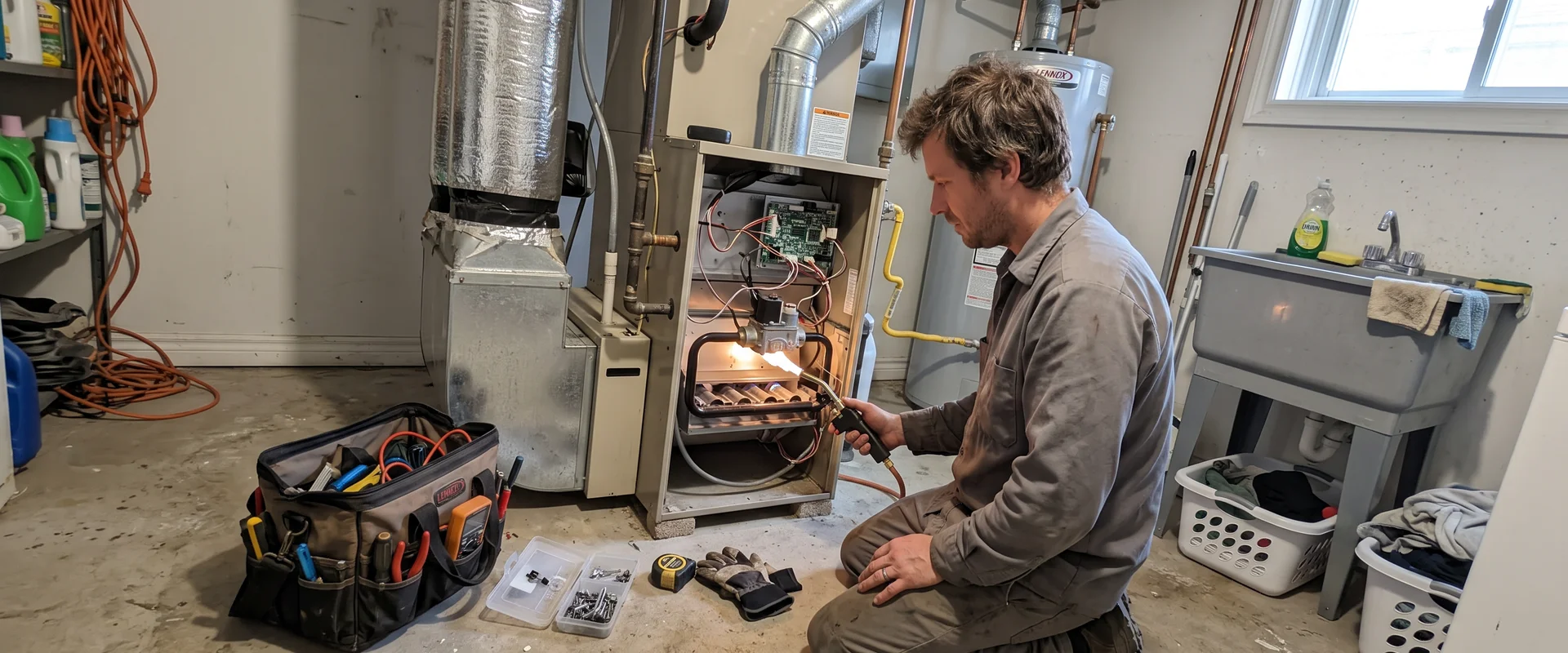
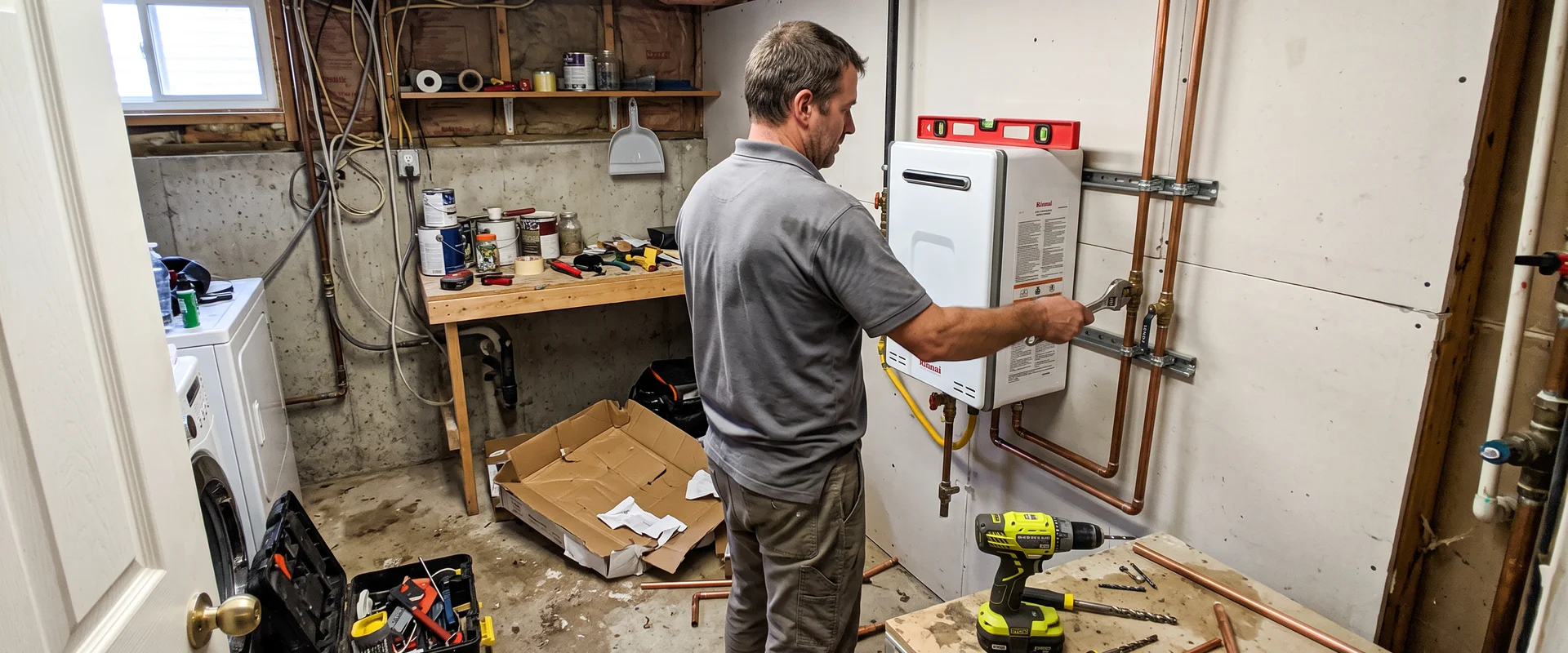
Best HVAC Toronto installs, replaces, and repairs condensing tankless water heaters in residential homes across Toronto and the GTA, from North York detached houses to semi-detached homes in East York and newer townhouses in Mississauga. Every install is completed by TSSA-certified G1 and G2 gas technicians to Ontario Building Code and TSSA gas code, and carries a 2-year labour warranty.
A conventional tank keeps 150 to 250 litres of water hot around the clock whether you use it or not. A tankless unit heats water only when a tap opens, firing a condensing heat exchanger and raising the water temperature as it flows through. Nothing is stored, so nothing sits losing heat, and you cannot run out of hot water part way through the third shower of the morning.
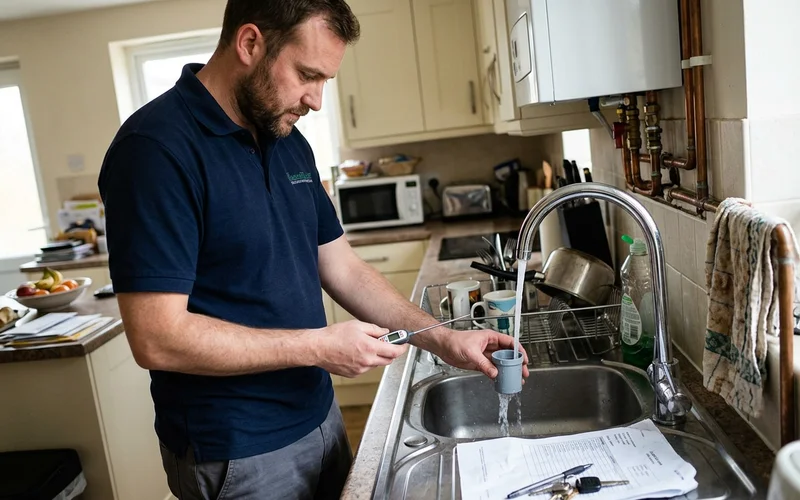
The trade-off is that a tankless unit is limited by flow rate rather than by volume. Capacity is expressed as gallons per minute at a given temperature rise, and that is where most disappointing installations go wrong. A unit rated at 6 GPM is quoted at a temperature rise measured under mild conditions. Toronto’s municipal water is drawn from Lake Ontario and arrives considerably colder in February than in August, so the same unit might only manage 4 GPM at the same output temperature in the middle of winter. We size on the winter figure, counting fixtures and realistic simultaneous use, because that is the condition your household will judge it by.
The other pre-install check that matters is gas supply. A tank water heater might draw 40,000 BTU. A tankless unit firing flat out draws 150,000 to 199,000. Half-inch supply piping that was perfectly adequate for the tank frequently is not adequate for the tankless, and undersized gas supply produces poor performance and nuisance error codes. We calculate the load against your Enbridge meter and quote any required gas line upsizing up front.
Going tankless also changes the rest of the mechanical room. If an old atmospheric tank shared a chimney with a mid-efficiency furnace or boiler, removing it can leave that appliance alone in an oversized flue, which then needs a liner or new venting. The Best HVAC Toronto crew checks the furnace, boiler, and any hydronic air handler before quoting, so the new water heater and the existing heating system work together.
What every water heater installation includes
Household flow-rate sizing, gas load calculation, removal and disposal of the old tank where applicable, wall-mounted condensing unit, isolation valve kit for future descaling, new concentric or power direct venting, condensate drainage and neutralisation, gas piping modifications where required, full commissioning with gas pressure verified under load, and manufacturer parts coverage registered on your behalf. We install Navien, Rinnai, Bosch, and Rheem condensing units.
For water heater repair on an existing tankless, common faults are ignition failures, flame sensor and flow sensor errors, scale-related overheating codes, and condensate blockages. Diagnostics start from $150 and you get a written repair quote before any parts are replaced.
Is going tankless worth it for your household?
Tankless usually wins when
You regularly run out of hot water, you have three or more bathrooms, you want the mechanical room floor space back, you are already replacing venting or gas piping for other reasons, or you plan to stay in the home long enough to recover the higher install cost through lower standby losses.
A high-efficiency tank is often better when
Demand is modest and predictable, the mechanical room already accommodates a tank comfortably, the gas supply would need substantial upsizing, or you are selling within a few years. We are happy to quote both and let you compare.
Maintenance is not optional
Annual descaling is what separates a tankless unit that lasts 20 years from one that fails in 10. Mineral scale builds inside the heat exchanger, restricting flow and eventually triggering fault codes. Because we fit isolation valves on every installation, the annual flush is a quick, inexpensive visit rather than a job requiring pipework.
How much does tankless water heater installation cost in Toronto?
Installed pricing runs $3,500 to $6,500 (2026 pricing). Flow-rate capacity comes first: a higher GPM unit for a larger household costs more than an entry model. Second is what you are replacing. Swapping an existing tankless for a new one is the cheapest path since venting and gas supply are usually already correct. Converting from a tank means new venting, condensate management, and often gas upsizing.
Third is the venting route. A unit that can terminate through a nearby exterior wall is straightforward; one needing a long run through a finished basement in an Etobicoke bungalow or a tight mechanical closet in a Scarborough townhouse costs more. Fourth is gas piping, which is the single most common reason a tank-to-tankless conversion costs more than people expect. Fifth is optional extras such as a recirculation loop for near-instant hot water at distant fixtures.
Every one of these is assessed during the free on-site estimate and itemised in a written quote before we begin. Financing is available on approved credit.
Sizing for flow rate: GPM, temperature rise, and UEF
A tankless water heater heats water on demand as it flows through the unit, rather than heating and storing a fixed volume in a tank. When a hot tap opens somewhere in the home, the flow sensor detects incoming cold water, the gas valve opens, and the burner fires. Cold water passes through the primary heat exchanger where it absorbs heat from the combustion, and hot water flows out to the tap within seconds. When the tap closes, the burner shuts off. No standing storage, no standby heat loss, no waiting for a tank to reheat.
The critical spec on any tankless is DHW flow rate, expressed in litres per minute (LPM) or gallons per minute (GPM) at a specific temperature rise. Every ENERGY STAR tankless carries a UEF rating too, which measures thermal efficiency and standby losses across a standardised draw pattern. Toronto’s cold water enters at roughly 5-7°C in winter, and typical hot water setpoint is 49°C, giving a required temperature rise of about 42-44°C. A residential condensing tankless like a Navien NPE-240A2 delivers about 13 LPM at that rise, enough for two showers simultaneously plus a hand basin. Larger homes with three-plus bathrooms and multiple simultaneous hot water demands may need a higher-capacity unit like the NPE-320A2 or a cascaded pair of smaller units. Undersizing shows up as cold-showering when someone starts a second tap while another is already running. We size against actual hot water demand at your home, not against a generic square-footage recommendation.
Endless hot water: the benefits and the trade-offs
Benefits are straightforward. Endless hot water: as long as the burner fires, hot water flows. Space savings: the unit is roughly the size of a large suitcase and wall-mounts, freeing up the floor area a 40-60 gallon tank would occupy. Energy savings: elimination of standby losses (a tank loses heat 24/7 to keep its contents warm even when no one is home) typically saves 20-30% on domestic hot water energy use. Longer lifespan: quality tankless units run 15-20 years compared to 10-12 for tanks. Higher rebate eligibility: ENERGY STAR condensing tankless units are more likely than standard tanks to qualify for Ontario efficiency incentives, and we confirm current eligibility for your chosen model before you commit.
Drawbacks are real too. Upfront cost is meaningfully higher than a tank ($3,500-$6,500 installed for a tankless versus $1,800-$4,500 for a tank), especially if the install includes venting, gas line upsize, or electrical work. Flow rate is capped by the unit’s BTU output, so simultaneous heavy use (three showers running plus a load of dishes) can exceed capacity in a mid-tier unit. Annual descaling flush is required in Toronto’s moderately hard water; skipping it shortens lifespan and voids some warranties. Winter cold water inlet temperature reduces flow rate compared to summer, so a unit sized for summer may struggle in January. And short-cycle draws (someone runs 3 seconds of hot water to wash their hands) waste some energy on the ignition-to-flow lag. On balance, tankless wins for most homes replacing an aging tank in 2026, especially with rebate stacking and the space savings, but it is not universally correct.
Tank vs tankless: which fits a Toronto home?
The decision usually comes down to household size, hot water usage pattern, upfront budget, and available install space. Tank water heaters ($1,800-$4,500 installed, 10-12 year lifespan) work well for smaller households (one to three people) with moderate simultaneous demand, older homes where space and existing venting favour a tank swap, and budget-focused installs where the higher upfront cost of tankless is not worth the operating savings within your expected time in the home. A properly-sized 50-gallon high-efficiency gas tank meets the daily needs of most Toronto detached homes at reasonable cost.
Tankless water heaters ($3,500-$6,500 installed, 15-20 year lifespan) win for larger households (four-plus people) with high simultaneous hot water demand, homes replacing an existing rental tank where the buyout cost is being folded into the upgrade, and any owner planning to stay in the home 10+ years to recover the upfront cost through lower operating expenses. Where a qualifying model attracts Ontario efficiency incentives, the net upfront gap to a tank swap narrows further. Hybrid heat pump water heaters (a third category) sit between the two on cost and win on operating efficiency in unfinished basements with adequate ambient temperature. Best HVAC Toronto models all three during the estimate against your Enbridge bill history and hot water pattern.
If you are searching for tankless installation near you, our crews cover Toronto, North York, Scarborough, Etobicoke, Mississauga, Vaughan, Markham, and the rest of the GTA, Monday through Saturday from 7 AM to 8 PM.