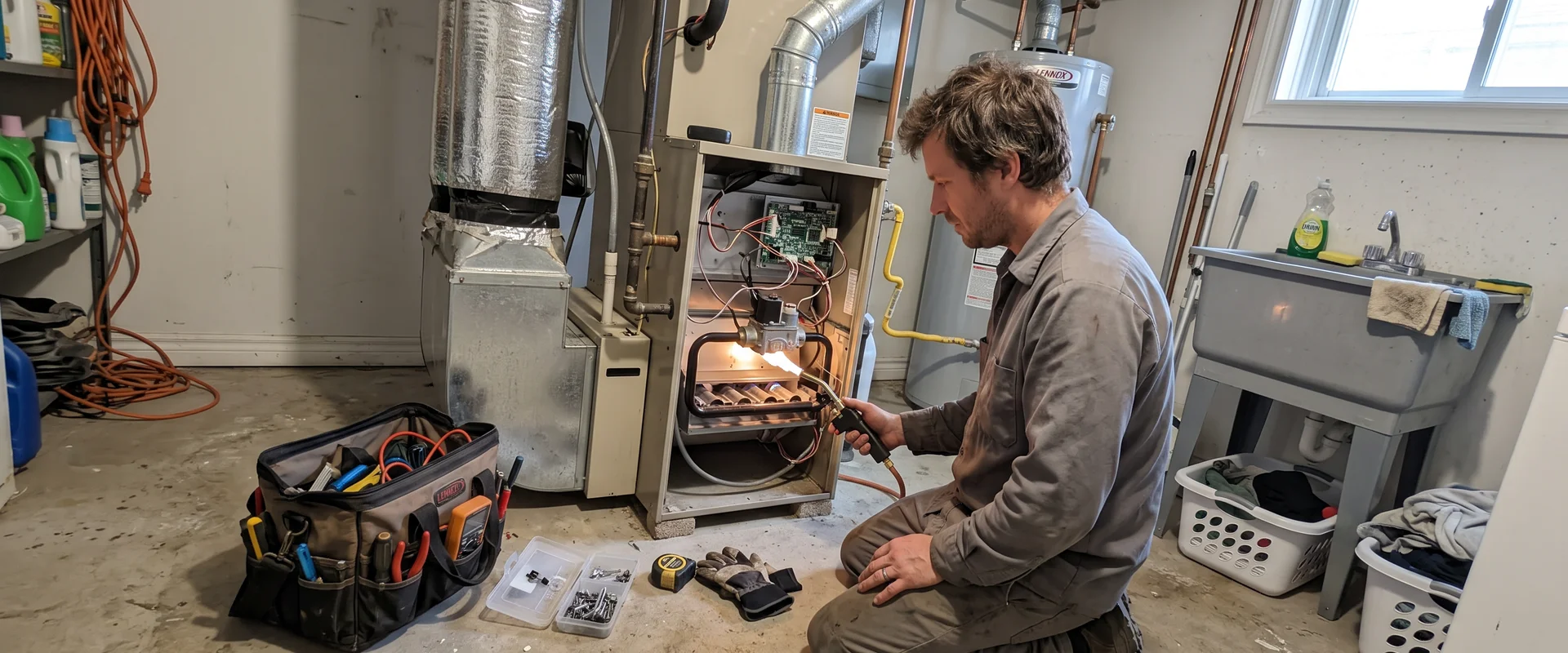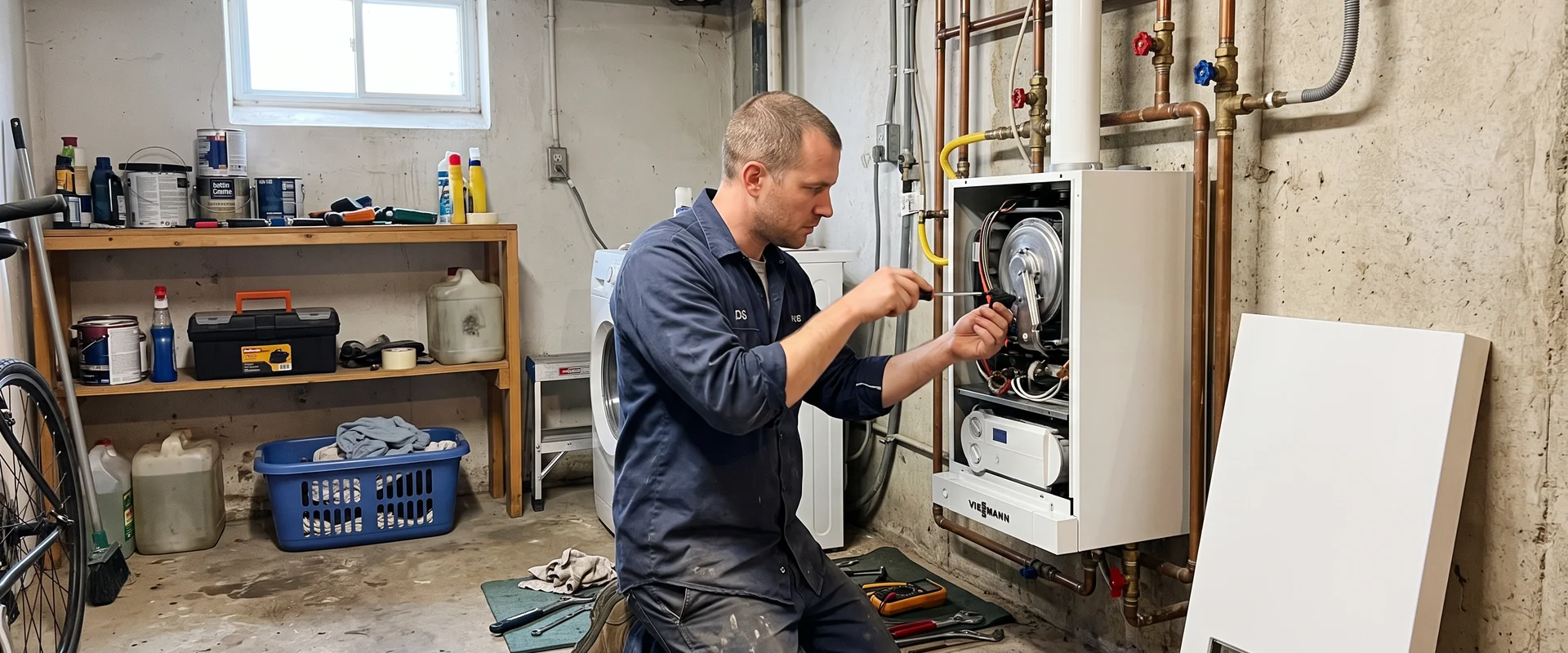
Best HVAC Toronto is a TSSA-certified HVAC contractor in Toronto, Ontario, handling boiler repair and troubleshooting, condensing boiler installation, and annual boiler maintenance across the GTA. Every job is done by licensed technicians holding TSSA G1 or G2 gas tickets, backed by more than 20 years of combined Ontario HVAC experience, WSIB coverage, and $2 million in general liability insurance. No-heat emergencies get a typical 2-hour response, 24/7.
Uneven radiators, a boiler that keeps losing pressure, and heating bills that climb every winter are the calls we take most, from Victorian semis in Leslieville and The Annex to post-war bungalows in East York and low-rise apartment buildings in Etobicoke.
Hydronic heating done properly, from combi to cast iron
The crew installs, repairs, and maintains residential and commercial boilers, from modern wall-mounted condensing combi-boilers to traditional cast iron sectional units still serving original radiator loops in detached homes, semis, and triplexes.
We service Viessmann, Navien, IBC, Weil-McLain, and Bosch boilers, and Best HVAC Toronto is a manufacturer-authorized Bosch dealer. Hydronic heating is a separate discipline from forced air, and every boiler we touch is commissioned by a gas technician, not a general handyman.
Water temperature, flow rate, and control strategies determine whether your property feels comfortable. Our technicians calculate heat load, flow rate, and supply temperature before choosing equipment. A condensing unit dropped into an old high-temperature loop without an outdoor reset control will rarely save you money. We design the whole system to ensure you get the performance you paid for.
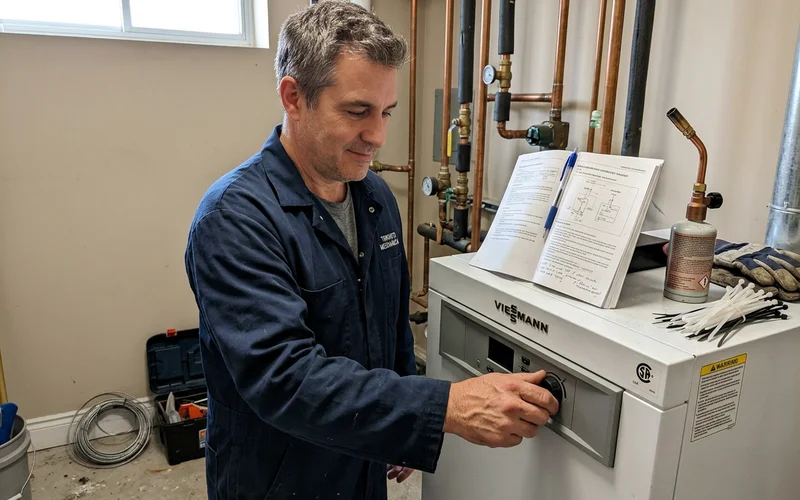
Older neighborhoods in North York, Old Oakville, and central Oshawa still feature cast iron boilers operating at roughly 60 to 70 percent efficiency. Meanwhile, newer condo conversions and custom builds rely on high-efficiency cascade systems.
Annual boiler maintenance before the heating season, covering combustion analysis, condensate trap cleaning, expansion tank charge, and low-water cutoff testing, keeps these modern units running and catches most failures before the first cold snap.
Old vs. New Boiler Efficiency
| Boiler Type | Typical Efficiency | Best Application |
|---|---|---|
| Cast Iron Sectional | 60% - 70% | Older radiator loops operating at high temperatures. |
| Modern Condensing | Up to 95% | In-floor radiant heating and low-temp systems. |
What is included in a boiler installation
You need to know exactly what happens during a full replacement. Our standard installation process covers every technical detail to protect your investment. Every comprehensive upgrade includes:
- Accurate heat load calculation and custom zoning design.
- Safe removal and disposal of the old heating unit.
- A new boiler equipped with correctly sized circulator pumps and an expansion tank.
- Near-boiler piping completed to exact manufacturer specifications.
- Low-water cutoffs, safety controls, and proper condensate management.
- Full air purging, zone balancing, and configuration of the outdoor reset control.
Boiler repair in Toronto: the faults we fix most
Most boiler repair calls in Toronto come down to five faults. Diagnosis starts at $150, is credited to the repair, and most service calls run $250 to $500.
System pressure keeps dropping
Water is escaping somewhere in the piping, or the expansion tank has failed. The usual culprits include a weeping relief valve, a leaking circulator seal, or a waterlogged tank.
Our technicians pressure-test the loop to find the exact source of the leak before repairing it. Repeatedly topping up the pressure introduces fresh oxygenated water, which quickly corrodes your pipes from the inside out.
Some radiators stay cold
Cold spots at the top of a radiator almost always indicate trapped air. A completely cold radiator while others heat up points to a broken zone valve or a flow restriction.
We bleed the lines, replace faulty circulators, and balance the loop to restore even heating across your home. Sludge buildup also causes major blockages over time if left untreated.
Boiler short-cycles
Short-cycling means the unit fires up for a minute and shuts off repeatedly. This normally happens when an oversized boiler cannot match the current heat load.
Our technicians fix it by tuning the control strategy, adding outdoor reset, or downsizing at replacement. Frequent cycling wears out ignition components prematurely and wastes expensive natural gas.
Kettling noises
Banging or rumbling sounds from the heat exchanger usually indicate local hot spots caused by mineral scale. Toronto’s Lake Ontario municipal water is moderately hard, at roughly 120 to 130 mg/L, so scale builds up steadily inside heat exchangers.
We perform chemical flushes to remove this mineral buildup and quiet the system down. Installing a magnetic filter prevents this annoying problem from coming back.
No hot water from a combi
A lack of hot water usually points to a failing diverter valve or a heavily scaled plate heat exchanger. Both of these components are entirely repairable, and where a combi cannot keep up with demand a dedicated tankless water heater is often the better answer.
Our preventative maintenance plans include an annual descale to fight off Toronto’s hard water. Skipping this yearly service almost guarantees a clogged heat exchanger down the road.
What does a new boiler cost in the GTA?
When repairs keep stacking up, boiler replacement becomes the better spend. In 2026, boiler installation in the GTA runs $5,000 to $15,000 depending on type, capacity, and complexity.
Our detailed quotes break down every single factor so you know exactly what you are paying for. The type and output of the equipment always dictate the baseline price.
A compact wall-hung condensing combi for a semi-detached home is generally the most affordable route. These combi units usually run between $6,000 and $11,000 fully installed.
Best HVAC Toronto also installs high-output system boilers with indirect tanks for larger properties, which sit at the higher end of the pricing scale. Near-boiler piping is the second major cost factor, as modern units require specific primary and secondary arrangements.
Third, adding zone valves or individual thermostats improves comfort but increases material and labour costs. Venting requirements also play a huge role in the final bill.
We must install sealed PVC or polypropylene venting for condensing units instead of using an old masonry chimney. This change sometimes strands an existing gas water heater on an oversized flue, requiring a new custom liner. Left uncorrected, poor draft is one of the faults that most often triggers an Enbridge red tag.
2026 Boiler Price Estimates
| Installation Type | Estimated Cost (GTA) | Best For |
|---|---|---|
| Conventional Swap | $5,500 - $9,500 | Direct replacements of standard older units. |
| High-Efficiency Combi | $6,000 - $11,000 | Smaller homes needing heating and hot water. |
| Condensing System Boiler | $7,000 - $13,000 | Larger homes with high hot water demand. |
Finally, the condition of your existing distribution pipes affects the required prep work. Old cast iron systems benefit massively from a power flush before the new heat exchanger is connected.
Our estimators assess all these details during a free on-site visit and provide one clear, written price, with financing available on approved credit. Rebate programs such as the Home Renovation Savings Program change by equipment type, so we confirm eligibility for your specific boiler in writing rather than assuming a rebate applies.
Are you ready to upgrade your mechanical room and enjoy reliable heat all winter?
Do not wait until a total breakdown leaves you in the freezing cold. Every installation carries a 2-year labour warranty plus 5 to 10 years of manufacturer coverage, registered on your behalf.
Call 647-254-4113 to book boiler repair or a free, itemized installation quote.
Warning signs your boiler needs same-day service
Boilers fail in slower, more predictable ways than furnaces because there is less moving equipment. The most common issues we see: no heat or no hot water despite the boiler firing, usually a pump failure or a stuck diverter valve on a combi boiler; loss of system pressure below about 12 psi (roughly 1 bar), indicating a leak somewhere in the loop, often at a rad valve, a pump gasket, or the pressure relief valve itself; kettling noises during operation, meaning limescale has built up inside the heat exchanger and is restricting flow; and inconsistent radiator temperatures across the home, usually air in the system, a stuck TRV, or an imbalanced circulator loop.
Three warning signs demand same-day service. A carbon monoxide alarm going off, a yellow or lazy burner flame, or soot around the boiler means you should leave the house and call 911 and Enbridge Gas, then book a combustion check before the boiler runs again. Any visible water on or under the boiler, or under a radiator or PEX joint, needs to be diagnosed before it stains through the ceiling. Any pressure relief valve that has actuated (spurted water out the discharge tube) means the expansion tank or the pressure regulator has failed and the system is at risk of overpressuring. Both are diagnosable inside 30 minutes and correctable the same visit for most homes. Older cast iron sectional boilers give more advance warning: rust streaks under the pump, weeping at flange gaskets, and rising fuel bills over consecutive winters all point to a boiler approaching end of life.
Combi, system, or conventional: which fits your home?
Combi (combination) boilers heat the home and provide domestic hot water on demand from a single unit, with no storage tank required. Cold water enters, flows through the primary heat exchanger, and comes out hot to the tap in seconds. Conventional (heat-only) boilers heat the home only and require a separate hot water tank, which is typically a storage cylinder heated by an indirect coil from the boiler. System boilers sit between the two, with the pump and expansion vessel integrated into the unit but still requiring an external hot water cylinder.
Combi boilers make sense for smaller homes with one to two bathrooms and lower simultaneous hot water demand, since the flow rate at the tap is limited by the boiler’s DHW output (typically 12-16 litres per minute for high-end residential combis). They save space (no tank), lower standby heat loss (no tank losing heat 24/7), and typically cost less to install. Conventional and system boilers make sense for larger homes with three or more bathrooms where simultaneous hot water demand at multiple taps exceeds combi capacity, or where high-flow fixtures like rainfall showers require sustained flow rates a combi cannot maintain. For most Toronto detached homes under 2,500 square feet with two bathrooms, a modern condensing combi is the right choice. Above 2,500 square feet or three-plus bathrooms, a system boiler with a properly-sized hot water cylinder usually wins.
Hydronic vs forced-air heating for older Toronto homes
Boilers and furnaces solve the same problem (heating the home) with fundamentally different distribution: boilers move hot water through radiators or radiant tubing, furnaces move warm air through ducts. The choice usually depends on what your home already has. Converting from hydronic to forced-air (or vice versa) is a major renovation involving removing radiators or ducts, installing the opposite distribution, and refinishing walls or ceilings; it typically only makes sense during a substantial reno anyway.
Comfort characteristics differ meaningfully. Hydronic heat delivers even radiant warmth from radiators or in-floor tubing with no air movement, quiet operation, and no drying effect. It works especially well for older Toronto homes with cast iron radiators that provide gentle background heat throughout the day. Forced-air furnaces deliver quick warm-up times, integrate with central air conditioning and humidification, allow zoning through dampers, and pair naturally with HRV/ERV ventilation systems. On operating cost, a properly-sized condensing boiler and a properly-sized condensing furnace are within a few percent of each other at Enbridge’s current gas rates. The bigger operating cost difference comes from distribution: a well-insulated hydronic system loses less heat in transit than an air system with leaky ducts, but the reverse is often true if the hydronic system is old and uninsulated. For a new Toronto build without existing distribution, forced-air with heat pump-ready ductwork is the more flexible choice; for a heritage Toronto home with functional radiators, keeping and modernising the hydronic system is often the smarter call.