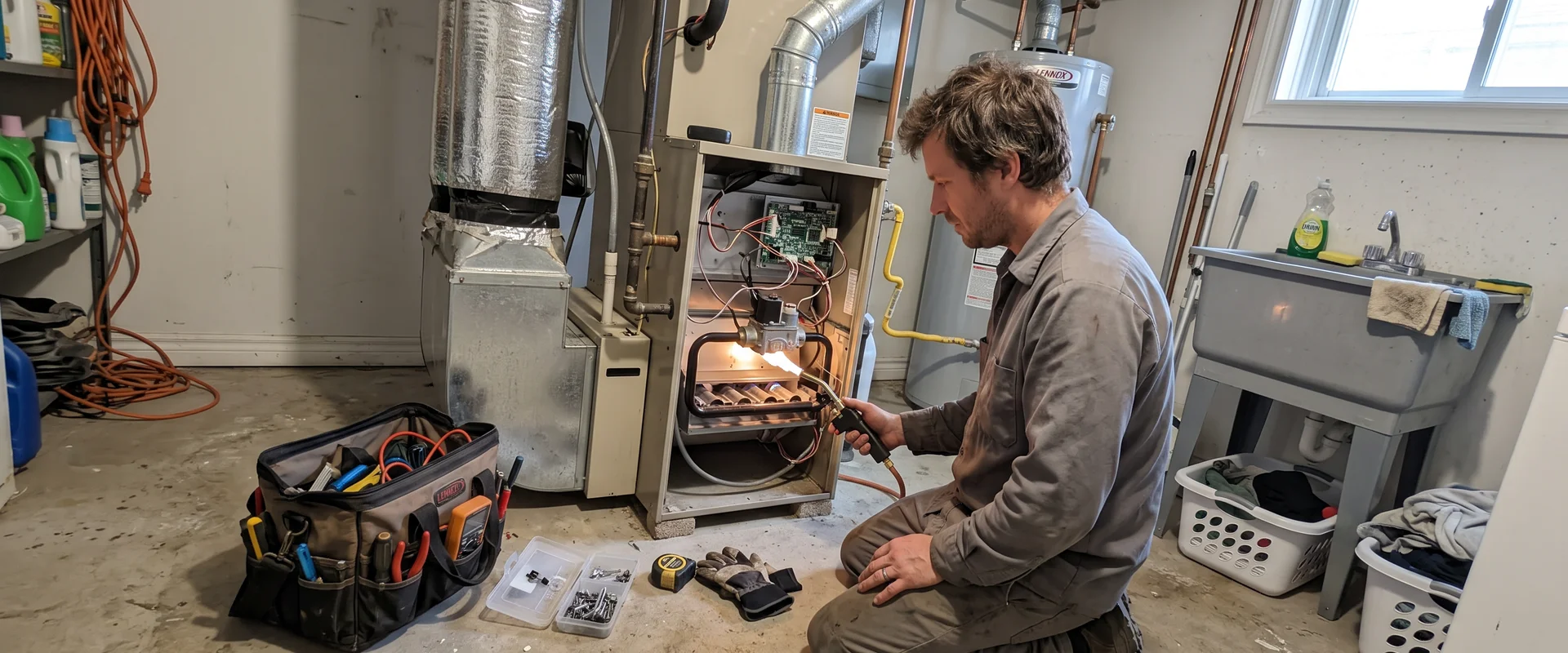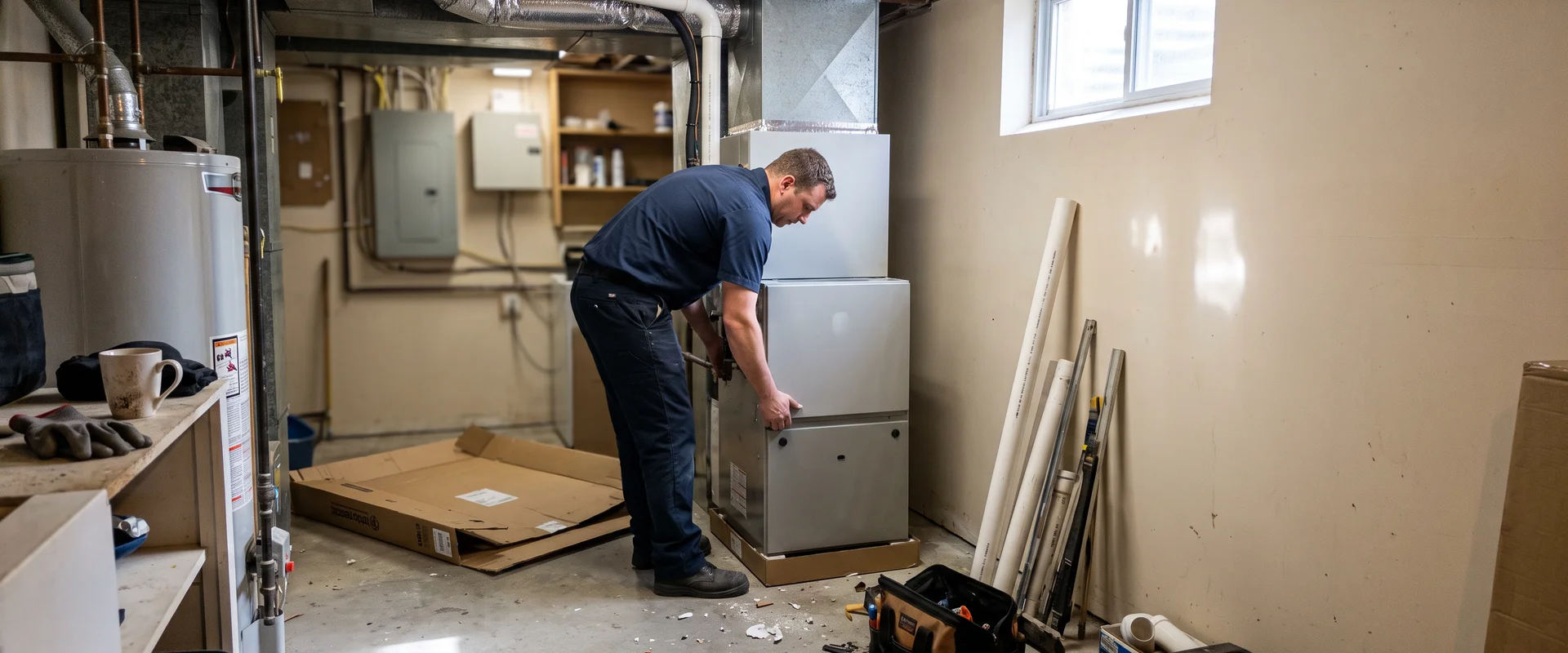
What is included in furnace repair and installation?
Best HVAC Toronto is a family-owned HVAC contractor in Toronto whose licensed HVAC technicians, all TSSA-certified with G1 and G2 gas licences, install, replace, and repair high-efficiency gas and electric furnaces across Toronto and the GTA. The crew brings over 20 years of combined Ontario HVAC experience, and furnace work sits alongside our other HVAC services: air conditioning, heat pumps, ductwork, and HRV ventilation. On the repair side that means fast, accurate diagnosis of no-heat calls and heat exchanger safety checks, with same-day service on weekday emergencies and 24/7 dispatch when a house is genuinely cold. On the installation side it means a properly sized, correctly vented, fully commissioned system rather than a like-for-like swap of whatever was there before.
The sizing point deserves emphasis because it is where most Toronto furnace replacements go wrong. The easy approach is to read the nameplate on the old unit and order the same output. The problem is that the old unit was usually oversized to begin with, and the house has often had windows, insulation, or an addition changed since. An oversized furnace satisfies the thermostat quickly, shuts off, and repeats, which produces temperature swings, noisy short cycles, and premature wear on the igniter and inducer. We run a Manual J heat load calculation instead, which is why our replacements usually come in at equal or smaller capacity and still heat better.
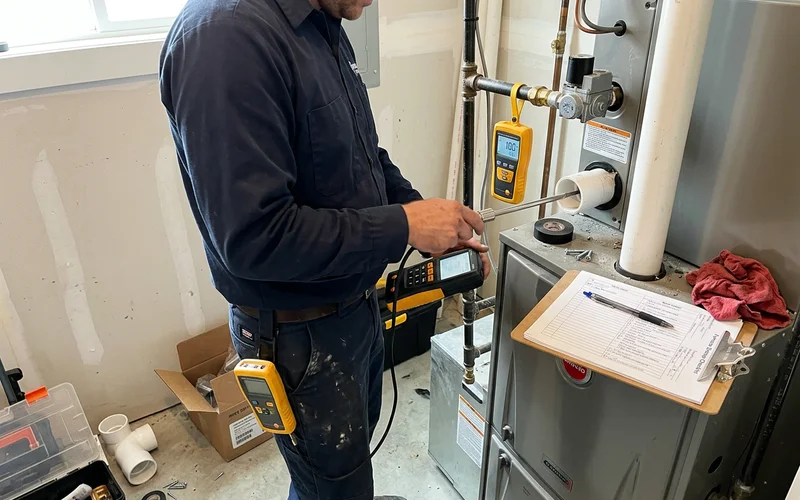
Every installation includes a full commissioning: gas pressure set with a manometer, temperature rise measured against the manufacturer’s specification, static pressure checked across the blower, venting verified, and a combustion analysis with carbon monoxide readings recorded. That last step is the one most often skipped, and it is the one that tells you whether the appliance is actually burning cleanly.
What is included in every furnace installation
Removal and disposal of the old unit, a new ENERGY STAR-rated condensing furnace from Lennox, Carrier, Trane, Bosch, Napoleon, or York, PVC intake and exhaust venting to the side wall, condensate drainage and neutralisation where required, a new thermostat if yours is not compatible, a TSSA safety inspection, permit where applicable, a 2-year labour warranty, and manufacturer parts coverage of 5 to 10 years registered on your behalf.
Common furnace repair calls in Toronto homes
The furnace runs but there is no heat
Usually a failed hot surface igniter or a dirty flame sensor. Both are inexpensive parts we carry, and both produce the same symptom: the blower runs, the burners try to light, and the unit locks out after three attempts. A cracked or blocked pressure switch hose is the third common cause. On every repair call Best HVAC Toronto technicians also inspect the heat exchanger, because a crack there is a carbon monoxide risk rather than a comfort problem.
The furnace short-cycles
Turning on and off every few minutes points to either an oversized furnace, a badly restricted filter, or a failing limit switch. In Scarborough, North York, and Etobicoke bungalows with finished basements, restricted return air is the usual culprit, and correcting the ductwork solves it far more cheaply than new equipment.
Loud bangs on startup
Delayed ignition, where gas accumulates briefly before lighting. It is unpleasant and it is also hard on the heat exchanger. The cause is normally dirty burners or incorrect gas pressure, both correctable on a service visit.
The blower runs constantly
Often a stuck fan relay or a thermostat set to “on” rather than “auto”. Occasionally it is a failing limit switch keeping the blower engaged to shed heat, which is worth diagnosing quickly.
Rising gas bills with no comfort change
A mid-efficiency furnace steadily losing efficiency, restricted airflow, or duct leakage into an unconditioned space. This is the point at which a load calculation and an honest replacement conversation usually make sense, including whether a rebate-eligible cold-climate heat pump suits your home better than another gas furnace.
How much does a new furnace cost in Toronto?
Five factors move the price within the $3,500 to $7,500 band. The efficiency tier and burner staging come first: a single-stage 96% AFUE unit is the entry point, while two-stage and modulating furnaces with ECM variable-speed blowers cost more and deliver noticeably more even heat in larger homes. Physical size and output are second, driven by the load calculation rather than the old nameplate.
Third is venting. Moving from chimney venting to PVC side-wall venting is routine, but if a gas water heater is left behind on the chimney, it will need a properly sized liner. If it is not corrected, it is one of the most common causes of an Enbridge red tag. Fourth is ductwork: homes with undersized returns, common in post-war Toronto bungalows with finished basements, get better results if the distribution is corrected at the same time. Fifth is accessibility, since a tight mechanical room in an older East York or Leaside semi takes longer to work in than an open Vaughan basement.
We identify all five during the estimate and put them in writing before we start, so the price you agree to is the price you pay.
Why is my furnace not turning on?
A furnace that refuses to start almost always traces to one of five faults. The thermostat is first: a dead battery, a tripped low-voltage fuse, or a wire loose in the R terminal will stop the call for heat before the burner ever fires. Next is the igniter itself. Hot surface igniters glow up to about 2,300°F and eventually fail. When they crack or burn through, the flame never lights, and the furnace locks out after three attempts. Flame sensors are third: a thin, dirty flame rod cannot prove the flame to the control board, so the burner shuts off within seconds of ignition, over and over. Fourth is the pressure switch. Blocked intake or exhaust vents, condensate backup in the trap, or a failed inducer motor will keep the switch open and stop the sequence cold. Fifth is the door safety switch, which cuts everything when a panel is off by even a fraction of an inch.
Before you call, check that the thermostat is set to Heat, the setpoint is above room temperature, the furnace switch on the joist next to the unit is on, the breaker in the electrical panel has not tripped, and the filter is not so clogged that the blower cannot start. If those checks are clear and the furnace still will not run, the fault needs a technician with a manometer and a multimeter to diagnose. On our no-heat calls we hold same-day weekday emergency capacity and 24/7 dispatch during a cold snap, and the diagnostic fee is applied to the repair. If you are searching for furnace repair near you, our technicians cover Toronto, Mississauga, Markham, Richmond Hill, and the rest of the GTA, with a typical two-hour response on emergencies.
Is it time to replace? 7 warning signs to watch for
A repair-first shop like ours will fix a furnace whenever the fix makes financial sense. When it does not, we say so. The seven signals that push a Toronto homeowner past the repair threshold are: age above 15 years for a mid-efficiency and 18 for a high-efficiency; repair costs that exceed roughly half the replacement price; frequent repairs, meaning more than one service call per heating season; visible cracks, rust, or corrosion on the heat exchanger; uneven heat between rooms that no amount of balancing solves; rising gas bills with no thermostat change; and safety flags such as CO alarms sounding, yellow burner flames, or an Enbridge Red Tag already on the unit.
Two of those signals matter more than the others. A cracked heat exchanger is a hard stop: the unit is condemned and gets replaced, not patched. Repair-cost math is the softer trigger: when we see a mid-efficiency furnace facing a $1,500 board and igniter repair, replacement usually wins on operating cost within three seasons because a 96% AFUE condensing unit uses roughly 20% less gas for the same output. If any three of the seven signals apply, we run a formal load calculation and put a repair-versus-replace number in writing so you can decide with the actual figures in hand.
AFUE ratings: single-stage, two-stage, and modulating furnaces
AFUE stands for Annual Fuel Utilization Efficiency and is expressed as a percentage of the gas energy input the furnace converts into usable heat over a full heating season. An 80% AFUE furnace turns 80 cents of every gas dollar into heat and vents the remaining 20 cents up the chimney. The Canadian minimum for gas furnaces installed today is 95% AFUE, so every unit we install is condensing and PVC-vented. The tiers above the minimum matter more than the AFUE number alone.
At the entry tier, single-stage 95-96% AFUE furnaces fire at one output level with a fixed-speed blower. They are the correct choice for smaller Toronto homes and townhouses under about 1,600 square feet where the load is small and even a single-stage unit meets it without short-cycling. Two-stage furnaces at 96-97% AFUE fire at roughly 65% output on mild days and step up to 100% only when the load demands it. Paired with an ECM variable-speed blower, they deliver noticeably more even heat and quieter operation in mid-size homes. Modulating furnaces at 97-98% AFUE run their gas valve continuously between about 40% and 100% of output, matching the load with the precision of a heat pump. They are worth the premium in larger homes above 2,500 square feet, in tightly zoned homes, and in owner-occupied properties where the extra comfort is felt daily. All three tiers qualify for the current Ontario rebate programs when installed with the correct commissioning documentation.
Manual J sizing: getting the furnace size right
Manual J is the ACCA load calculation that determines the correct furnace size, and it is what the Best HVAC Toronto crew runs on every installation quote. The output number is the design heating load in BTU per hour, calculated from the home’s insulation levels, window U-values, air leakage from a blower door test, orientation, and design temperature. Toronto’s design temperature is minus 22°C for heating, which means the furnace is sized to hold indoor setpoint on the coldest 1% of hours in a normal winter.
Oversizing is the more common mistake. A furnace 30% larger than the load will short-cycle: it satisfies the thermostat quickly, shuts off, and restarts a few minutes later. Short cycles waste gas, wear the ignition components, produce uneven heat, and stop the humidifier from adding usable moisture because the run time is too brief. Undersized furnaces are rare because homeowners tend to over-order for peace of mind, but an undersized unit will run continuously in a cold snap and never quite reach setpoint. Neither is safe or comfortable. The correct size, chosen from a Manual J on your specific home, delivers even temperatures, reasonable run times, quieter operation, and rebate compliance. On a typical Toronto detached home the answer usually falls between 60,000 and 100,000 BTU input, but the calc is the number that matters, not the neighbour’s furnace nameplate.
What furnace rebates are available in Ontario in 2026?
Three programs are actively paying for high-efficiency furnace installations in Ontario in 2026. The Home Renovation Savings (HRS) program, delivered by Enbridge Gas and the Independent Electricity System Operator, pays $250 for a 95%+ AFUE gas furnace paired with an ECM blower, or up to $1,000 when the furnace is installed as part of a dual-fuel setup with a cold-climate heat pump. HRS requires a pre- and post-retrofit EnerGuide evaluation, which we coordinate through a Registered Energy Advisor and file on your behalf.
The Canada Greener Homes Loan continues to offer an interest-free loan of up to $40,000 for eligible retrofits including high-efficiency furnaces installed together with envelope improvements or heat pump systems. The BetterHomesTO Home Energy Loan Program (HELP) offers up to $125,000 at low interest for owner-occupied Toronto homes, repayable through the property tax bill over up to 15 years and transferable if the home is sold. We handle the paperwork for all three programs, which typically returns $500 to $2,000 in direct rebates on a straight furnace replacement and up to $6,500 when a heat pump is paired with the furnace. Rebate eligibility is confirmed on the estimate, not after installation, so there are no surprises.
Furnace repair in Toronto: fix it or replace it?
The half-rule is the industry shortcut. If a repair would cost more than half the price of an equivalent new furnace, replacement usually wins. On a Toronto detached home the math typically looks like a $1,500 to $2,500 major repair versus a $3,500 to $7,500 replacement, so a repair in the $1,700 range on a 12-year-old unit is a strong replace signal. Age is the second factor. Below 10 years, repair almost always wins because the remaining useful life carries the cost. Between 10 and 15 years, the decision hinges on the specific repair, the AFUE of the existing unit, and whether current rebates make replacement effectively cheaper after incentives. Above 15 years, replacement usually wins even on smaller repairs because efficiency gains and reduced repair risk stack in its favour.
Safety flags override the math. A cracked heat exchanger is an automatic replacement, not a repair candidate: the risk of carbon monoxide leaking into the return-air stream is not something a patch can address, and any furnace with a confirmed crack in the heat exchanger will receive an Enbridge Red Tag at the next safety inspection anyway. Repeat failures across seasons are the third override. If we have replaced the igniter, then the inducer, then the board in three consecutive winters, the underlying issue is usually beyond individual components and points to a unit at end of life. Our repair estimate always includes the replace-versus-repair math on a same-day quote, and the diagnostic fee applies to whichever direction you choose.
Gas vs electric furnace: which costs less to run?
For most Ontario homes, gas remains the lower operating cost for heat. Enbridge natural gas landed at about $0.13 per cubic metre in early 2026, which works out to roughly $0.036 per kilowatt-hour of thermal energy delivered when accounting for a 95% AFUE furnace. Toronto Hydro electricity, at the time-of-use average of about $0.13 per kilowatt-hour, is roughly 3.5 times the operating cost per unit of heat delivered from a standard electric resistance furnace. On a typical Toronto detached home consuming 30,000 kilowatt-hours of heating energy per winter, that gap works out to about $1,500 to $2,000 in annual operating cost, which explains why electric resistance furnaces are rare in southern Ontario.
The comparison changes when a cold-climate heat pump enters the picture. A heat pump moves heat rather than generating it, delivering roughly 2.5 to 3.5 kilowatt-hours of heating for every kilowatt-hour of electricity consumed depending on outdoor temperature. That drops the effective electricity cost to about $0.04 per delivered kilowatt-hour, close to gas parity, and rebate stacking can make the heat pump cheaper to operate on many days of the year. Toronto condos are a different case: most high-rise units are heated by fan coils fed from a central boiler or by in-suite heat pumps rather than a furnace, so forced-air furnaces are mainly found in detached homes, semis, and townhouses. Full electric homes without a gas connection, and homes served by resistance baseboards where installing a gas line would cost $3,000 to $5,000, are often better served by a dual-fuel heat pump plus a small electric backup than by pulling a new gas line. The conversation on your specific home starts with a Manual J load calc and a bill history review, and we run both at no cost during the estimate.