Type A vs Type B: what your Enbridge red tag means
A red tag is the notice a gas technician or utility inspector attaches to an appliance when they find an unsafe condition. There are two kinds, and the difference matters. A Type A Warning Tag means the hazard is immediate, so the gas is shut off and the meter is locked before anyone leaves the property. A Type B Warning Tag means the fault is serious but not an immediate danger, and you are given a defined window to have it corrected before service is interrupted.
Enbridge Gas formally records the tag as a safety violation on your account, and either way the tag cannot legally be removed by you or by an unlicensed contractor. In Ontario, natural gas work is regulated by the TSSA (Technical Standards and Safety Authority): under Ontario Regulation 215/01 and the CSA B149.1 gas code, the work must be done through a TSSA-registered fuels contractor, and only a technician holding a TSSA G1 or G2 certificate can correct the fault and sign the clearance that lets Enbridge Gas restore service. That signature is the whole point of the process, and it is why choosing a licensed contractor rather than a handyman is not optional here.
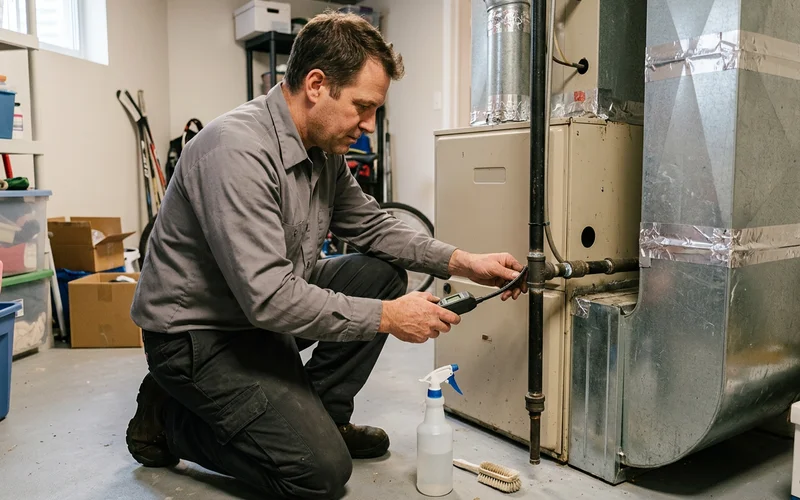
Red tag compliance is the stated specialty of Best HVAC Toronto, a family-owned HVAC contractor with over 20 years of combined Ontario crew experience. We attend Type A and Type B tags across Toronto and the GTA every week, from detached homes in North York to semi-detached houses in East York and townhouses in Mississauga, and our technicians arrive with the licence, the diagnostic equipment, and the common repair parts on the van. That combination is why most of the tags we attend are cleared with gas restored inside 24 hours rather than dragging on for a week.
What we do on a red tag call
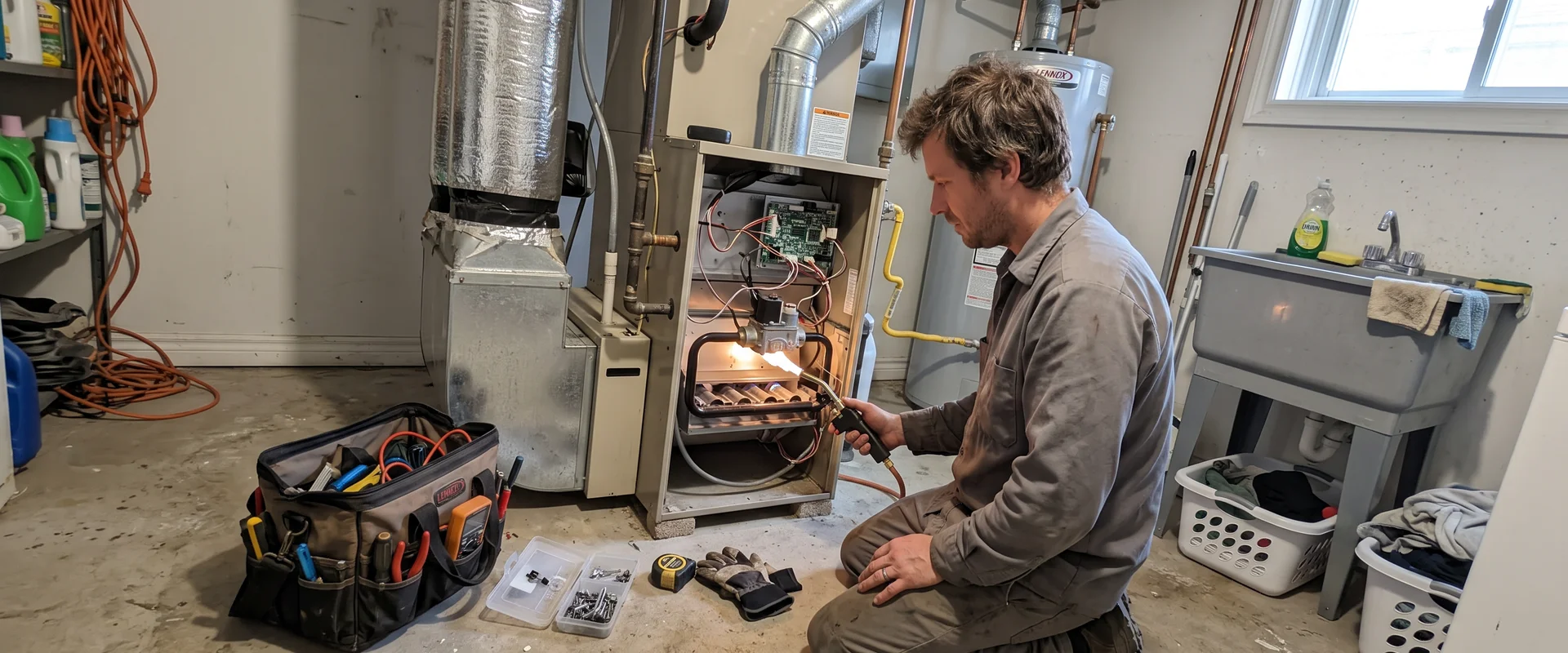
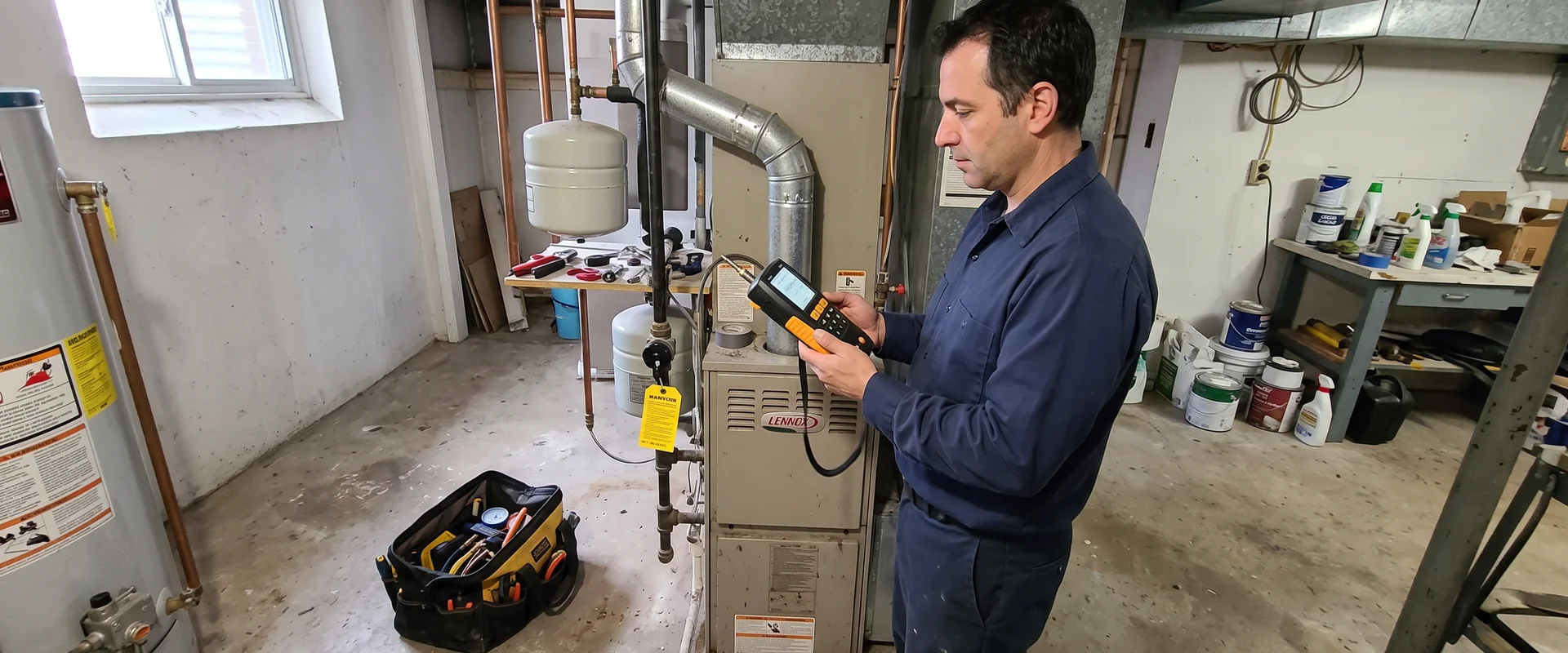
Our inspection covers the whole gas system, not only the appliance that was tagged. We run electronic leak detection on every accessible joint and connector, take a gas pressure manometer reading, scope the furnace heat exchanger with a borescope camera, and run a full combustion analysis with carbon monoxide readings in parts per million at the flue. We also check draft and venting on every gas appliance in the house, because in Toronto’s older housing stock, particularly pre-war semis and bungalows with original chimneys, the tagged appliance is frequently a symptom rather than the cause.
You then get the findings in plain language along with a fixed written price. Nothing gets replaced or repaired until you have agreed to it.
Why gas appliances get red-tagged in Toronto homes
Cracked or corroded furnace heat exchanger
The most common cause and the most over-diagnosed one. A genuine crack allows combustion gases to mix with the air circulating through your home, which is why the appliance must be taken out of service. We verify with a borescope image and combustion readings before recommending anything, and we are happy to provide a second opinion if another company has already given you a verdict.
Blocked, corroded, or improperly sized venting
When a high-efficiency furnace replaced a chimney-vented one years ago, the gas water heater is often left venting alone into a chimney far too large to draft properly. The result is spillage, condensation, and eventually corrosion. System 636 flue venting problems on newer high-efficiency equipment show up as well, usually where a previous installer used the wrong pipe or cement.
Gas leaks at fittings and connectors
Older flexible connectors, unsupported piping, and joints disturbed during a renovation are the usual sources. Electronic leak detection finds them quickly, and repairs are typically straightforward.
Elevated carbon monoxide in the flue
High CO readings point to incomplete combustion, which can come from a dirty burner assembly, a restricted flue, or a failing heat exchanger. A combustion analyzer separates these causes properly, where a visual inspection alone cannot.
Prior workmanship that never met code
Unpermitted gas line work, missing sediment traps, absent shut-off valves, and appliances installed without adequate clearance all draw tags. These are usually inexpensive to correct once identified.
How much does Enbridge red tag removal cost in Toronto?
The $350 inspection fee (2026 pricing) is fixed and covers diagnosis and documentation. What varies is the repair. Venting corrections, connector replacements, and control faults sit at the lower end. A heat exchanger replacement or a full appliance swap sits at the upper end, and on equipment older than about 15 years, replacement is usually the better value than a major component repair.
Three other factors move the number: how many gas appliances are involved, whether the chimney needs relining after the work, and whether a permit is required for gas piping changes. All of these are identified during the inspection and priced in writing before we begin, so there is no mid-job surprise.
If the tagged appliance turns out to need replacing, we can usually complete the swap the same week, whether that is a high-efficiency furnace replacement or a boiler installation, and installations carry our 2-year labour warranty alongside 5 to 10 years of manufacturer coverage. Best HVAC Toronto is a manufacturer-authorized dealer for Lennox, Carrier, Trane, Bosch, Napoleon, and York.
Your gas was just shut off: what to do first
An Enbridge Red Tag is a formal safety notice issued by an Enbridge Gas or Technical Standards and Safety Authority (TSSA) inspector when a gas appliance or system is found to be operating outside code or in a condition that presents a safety hazard. The tag is physically affixed to the appliance, and depending on the type, gas service is either shut off immediately or scheduled to be shut off within a set remedy period. A red tag is not a fine or a fault attached to the homeowner: it is a compliance instruction that must be resolved by a licensed TSSA G1 or G2 gas technician before gas can safely resume flowing to that appliance.
What you should do the moment a red tag is issued: read the tag itself to confirm whether it is Type A (immediate shut-off) or Type B (30 to 45-day compliance window). Do not attempt to remove the tag, restore gas yourself, or bypass the shut-off valve. Photograph the tag on both sides so we have the inspector’s notes and reference number when we arrive. Then call Best HVAC Toronto at 647-254-4113. On Type A tags we dispatch within two hours across the GTA, from Etobicoke to Scarborough. On Type B we book a compliance inspection typically within 48 hours so there is time to correct the fault, coordinate any Enbridge relight, and file the paperwork before the window closes. Every clearance is documented, signed by a G1 or G2 technician, and filed with Enbridge so the tag comes off the record properly.
Type A red tag: immediate gas shut-off explained
A Type A Red Tag is issued when the inspector finds an immediate life-safety hazard: an active gas leak, a cracked heat exchanger with CO leakage, a venting failure causing combustion gases to spill into the living space, or a CO alarm reading above the threshold on a live appliance. Type A gas is shut off at the meter or at the appliance valve before the inspector leaves, and the appliance is locked out. Restoration requires a licensed technician to correct the underlying fault, run a combustion analysis and a manometer pressure test, sign off on the clearance, and coordinate Enbridge to relight the meter.
Timeline for a typical Type A clearance: the initial call, dispatch within two hours, on-site diagnosis in roughly 30 minutes, corrective work between one and eight hours depending on scope, and Enbridge relight coordination that usually happens the same day if the fault is corrected before 3 PM. On a cracked heat exchanger the corrective work is a furnace replacement (or a heat pump conversion if you prefer), which we can typically stage within 24 to 48 hours. On a leak repair or venting correction, the same-visit clearance is common. Every Type A call carries our 2-hour target response and the diagnostic fee applied to the corrective work.
Type B red tag: the 30 to 45-day compliance window
A Type B Red Tag flags a fault that is not immediately dangerous but must be corrected within a set remedy period, typically 30 to 45 days depending on the inspector’s determination. Common Type B triggers include improper venting clearances, missing combustion air, undersized gas piping, out-of-date certifications on commercial equipment, and safety devices that have been bypassed or removed. Gas continues to flow during the remedy window, but if the fault is not corrected and re-inspected before the window closes, the tag escalates to Type A and gas is shut off.
Type B remedy work usually falls into one of three categories: venting corrections (adding B-vent extensions, correcting termination clearances, installing dedicated combustion air), piping upgrades (resizing runs to accommodate a new appliance load, adding sediment traps, replacing corroded pipe), or appliance updates (replacing a decommissioned model, installing missing safety devices). We schedule the compliance inspection within 48 hours of the tag being issued so there is buffer time to source parts, coordinate any structural work, and complete the correction well within the remedy window. Every Type B correction is signed off by a G1 or G2 technician and filed with Enbridge to close the tag on the record.
How is a cracked heat exchanger verified?
A cracked heat exchanger is the highest-consequence Red Tag call because it is invisible from the outside and the safety risk is carbon monoxide entering the return-air stream. Verification requires two separate diagnostic steps: visual inspection with a borescope camera and combustion analysis with a calibrated combustion analyzer. The borescope goes through the burner access opening and inspects each cell of the heat exchanger for cracks, corrosion holes, or separated seams. The combustion analyzer samples the flue gas for CO PPM (parts per million), O2 percentage, and stack temperature; any CO PPM reading above roughly 100 ppm in the supply air stream, or a spike in CO PPM when the blower engages, is diagnostic of a cracked heat exchanger.
A cracked heat exchanger is never patched or welded on a residential furnace. The unit is condemned and replaced. Manufacturers do warranty the heat exchanger for 20 years or more on many current furnaces, so if the unit is under warranty we file the claim with the manufacturer for the parts cost and you pay only the labour and any code-required upgrades. If you doubt the diagnosis (some inspectors have been criticised for over-tagging), we offer a certified second opinion using our own borescope and combustion analyzer at a flat diagnostic fee. If our reading disagrees with the original inspector’s, we file a written second opinion with TSSA and Enbridge that meets the standard for a formal dispute.
How fast can Enbridge turn your gas back on?
Restoration speed depends on the fault, the parts availability, and coordination with Enbridge for the relight. On a typical Type A call, the sequence is: dispatch within two hours, on-site diagnosis in about 30 minutes, corrective work of one to eight hours depending on scope, then Enbridge relight coordination. When we can complete the correction before 3 PM on a weekday, Enbridge typically relights the same day. After 3 PM, relight usually happens the next morning. Weekend Type A calls often involve overnight loss of gas service if the correction cannot be completed by 3 PM Saturday.
Cracked heat exchanger Red Tags requiring a furnace replacement can typically be resolved in 24 to 48 hours if we have the correct model in stock or can source it same-day through our Lennox, Carrier, Trane, or Bosch dealer channels. Temporary electric heaters are dispatched during the wait if the outdoor temperature is below zero. Water heater replacements after a red tag on the WH itself usually complete same-day because the appliance is common inventory. Type B remedy work typically completes within 5 to 10 business days from the initial call, well within the 30 to 45-day remedy window. Every clearance is signed by the responding G1 or G2 technician, filed with Enbridge, and documented to you with photos, combustion readings, and the TSSA reference number.
Annual CO and gas appliance safety inspections across the GTA
Carbon monoxide is odourless, colourless, and can kill an occupant within minutes at high concentrations. The Ontario Fire Code requires a working CO alarm outside every sleeping area in any home with a fuel-burning appliance, fireplace, or attached garage, and most alarms need replacing every 7-10 years depending on the model. A CO alarm sounding is treated the same as an active gas emergency: leave the home, call 911, and call us for the appliance diagnosis. Do not silence the alarm and go back to sleep.
Routine CO and gas appliance safety inspections are recommended annually for all gas equipment: furnaces, boilers, water heaters, ranges, fireplaces, and any gas dryer. Our inspection covers combustion analysis with a calibrated analyzer, gas pressure at the manifold with a manometer, venting integrity via visual and smoke test, safety switch continuity check, and CO readings at the supply air and living space. The inspection typically takes 45 to 60 minutes for a single appliance. Findings are documented in writing with photos, and any code deficiencies are flagged with a corrective quote at the same visit. Enbridge Red Tag risk is meaningfully reduced by an annual inspection because most Red Tag triggers (draft failures, cracked heat exchangers early stage, low gas pressure, blocked vents) are detectable months before they escalate to a formal tag.
Can you dispute a red tag? Certified second opinions
Yes, a Red Tag can be disputed, and a certified second opinion is your first step. The most common dispute is a cracked heat exchanger diagnosis where the visual inspection was not confirmed with combustion analysis, or the combustion analysis was performed on an appliance that had been running for insufficient time to reach steady state. A second opinion from an independent G1 or G2 technician runs a fresh borescope inspection plus a full combustion analysis, and issues a written report with the readings, photos, and recommendation. If the second opinion disagrees with the original tag, we file the formal dispute paperwork with TSSA and Enbridge on your behalf and the original tag can be rescinded.
Grounds for a legitimate dispute are narrow. The diagnosis was performed without the required instruments (borescope for HX inspection, combustion analyzer for CO/O2 readings). The technician was not properly certified for the appliance type. The fault claimed does not match the physical evidence on the appliance. Or the corrective specification exceeds what the code requires. Grounds that do not support a dispute: disagreement with the cost of correction, preference to delay the work, or personal opinion that the appliance still runs fine. Our second-opinion fee is flat and applies to the corrective work if the original tag is confirmed. If the tag is overturned, we still bill the flat fee, but you avoid the underlying replacement cost. About one in six second-opinion calls we run results in a legitimate dispute.